


January 5, 2026
Bike Breakdown on the Road? Learn the Right Way to Tow Your Bike
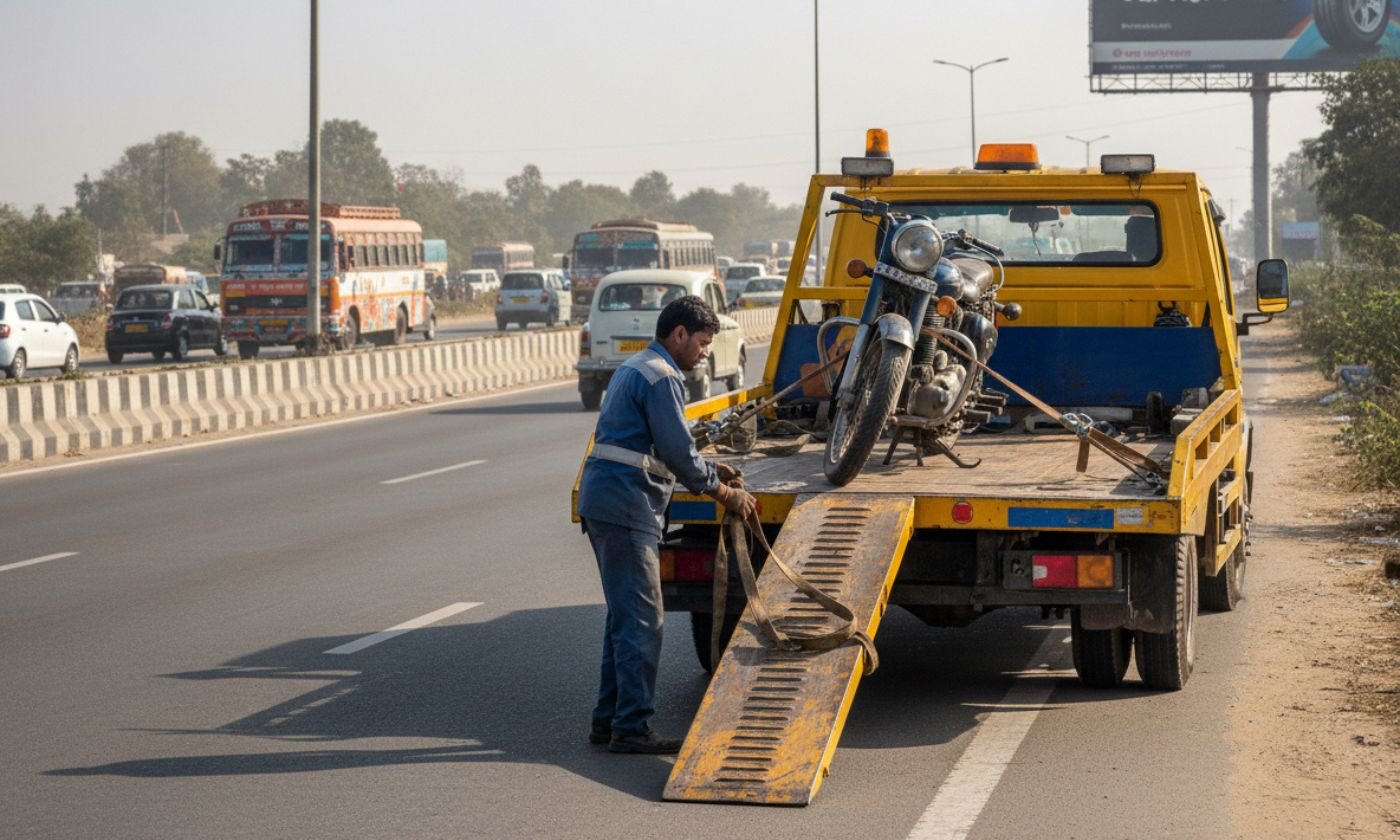
Breaking down on the road with your bike can be stressful. It may happen due to engine failure, a flat tyre, clutch problems, or even an accident. In such situations, towing your bike safely becomes important. Many riders panic or make mistakes while towing, which can damage the bike further or cause accidents.
Towing a bike is not just about pulling it with another vehicle. It involves preparation, the right equipment, and proper technique. Whether you are towing your bike using another bike, a car, or a professional tow service, you must follow the correct steps.
This article explains everything you need to know about towing your bike safely, step by step.
When Do You Need to Tow a Bike?
Before learning the steps, it is important to understand when towing is necessary.
You may need to tow your bike if:
- The engine refuses to start
- The clutch cable snaps
- The fuel system fails
- There is severe electrical damage
- The bike is not safe to ride after an accident
- You are stranded far from a repair shop
If the bike can be pushed safely for a short distance, towing may not be needed. But for longer distances or highways, towing is the safer option.
Step 1: Ensure Personal Safety First
Safety should always come first.
Before attempting to tow your bike:
- Move the bike off the main road if possible
- Switch on hazard lights of the towing vehicle
- Wear a helmet and protective gear
- Ask bystanders to help control traffic if needed
Never try to tow a bike in heavy traffic without proper caution. If the area feels unsafe, it is better to wait for professional help.
Step 2: Decide the Towing Method
There are different ways to tow a bike. The method depends on distance, available vehicles, and road conditions.
Common bike towing methods:
- Towing with another bike
- Towing with a car or SUV
- Using a flatbed or professional tow truck
- Using a bike tow rope or strap
For short distances, bike-to-bike towing may work. For long distances, a car or tow truck is the safest option.
Step 3: Gather the Right Equipment
Using the correct equipment is very important for safe towing.
Basic towing equipment includes:
- Strong towing rope or nylon strap
- Tow hook or frame attachment point
- Gloves for better grip
- Reflective tape or cloth for visibility
Never use thin ropes, old cables, or elastic materials. They can snap suddenly and cause accidents.
Step 4: Prepare the Bike for Towing
Before attaching the rope, prepare your bike properly.
Bike preparation checklist:
- Switch the ignition off
- Keep the bike in neutral gear
- Unlock the handlebar
- Check tyre pressure
- Ensure brakes are working
If the steering is locked, the bike will not balance during towing. Always unlock the handle.
Step 5: Attach the Towing Rope Correctly
This is one of the most important steps.
How to attach the rope safely:
- Tie one end to the towing vehicle frame, not the bumper
- Attach the other end to the bike’s main frame or footrest mount
- Avoid tying to the handlebar, mirror, or exhaust
- Keep the rope length around 3 to 4 meters
The rope should stay slightly loose, not fully tight. This helps in smooth movement and braking.
Step 6: Assign a Rider to the Towed Bike
A bike should never be towed without a rider on it.
The rider’s role includes:
- Balancing the bike
- Steering properly
- Applying brakes when needed
- Communicating with the towing vehicle
The rider must be experienced and alert. Inexperienced riders should avoid sitting on the towed bike.
Step 7: Set Clear Communication Signals
Clear communication avoids confusion during towing.
Before moving:
- Decide hand signals for stop, slow down, and emergency
- Use horn or light signals if possible
- Maintain eye contact when stopping or turning
Poor communication can lead to sudden jerks, falls, or collisions.
Step 8: Start Towing Slowly
Never rush while towing a bike.
Important speed guidelines:
- Start slowly and smoothly
- Avoid sudden acceleration
- Maintain low speed, ideally below 25 kmph
- Keep a steady pace
Sudden jerks can snap the rope or throw the rider off balance.
Step 9: Maintain Safe Distance and Control
The towing vehicle should always move in a straight line.
Avoid:
- Sharp turns
- Sudden braking
- Uneven road surfaces
- Potholes and speed breakers
The rider on the towed bike should apply gentle braking to keep the rope from going slack.
Step 10: Be Extra Careful While Turning
Turning is the riskiest part of bike towing.
Turning tips:
- Take wide turns
- Reduce speed before turning
- Signal early
- Ensure the rope does not get entangled
Sharp turns can pull the bike sideways and cause it to fall.
Step 11: Stop and Check Periodically
During long towing distances, take short breaks.
Check:
- Rope condition
- Attachment points
- Tyre pressure
- Rider comfort
This helps avoid unexpected failures midway.
Step 12: Know When to Call a Professional Tow Service
Sometimes, towing your bike yourself is not the best option.
Do not hesitate to contact a professional tow service like us if:
- The bike is badly damaged
- The distance is long
- The road is a highway
- You are alone
- Weather conditions are bad
Professional tow trucks use flatbeds or wheel clamps that prevent damage.
Common Mistakes to Avoid While Towing a Bike
Many riders make mistakes that lead to accidents or extra repair costs.
Avoid these common errors:
- Tying the rope to weak parts
- Riding too fast
- Locking the handlebar
- Towing without a rider
- Using damaged or elastic ropes
- Ignoring traffic rules
Being careless can turn a small breakdown into a major problem.
Legal and Traffic Considerations
In some regions, towing a bike on public roads may have restrictions.
Keep in mind:
- Follow local traffic laws
- Use hazard lights
- Avoid towing on expressways if not allowed
- Do not obstruct traffic
If stopped by traffic police, cooperate and explain the situation calmly.
Final Thoughts
Towing your bike is not complicated, but it requires patience, planning, and proper execution. A small mistake can lead to injuries or costly damage. By following the correct steps, using the right equipment, and maintaining clear communication, you can tow your bike safely to a repair shop or home.
Always remember that safety comes first. If you feel unsure at any stage, do not hesitate to reach out to Ride N Rescue for professional help. A safe tow is always better than a risky ride.
GET IN TOUCH
Related Blog
Similar articles you may like

Kolkata Drenched in Minutes: How to Save Your Car or Bike During a Cloudburst
When the skies opened up over Kolkata in September 2025, the city witnessed hours of relentless downpour that flooded streets,…
Roadside Assistance or Towing – Which Service Fits Your Situation?
Imagine you’re driving down the EM Bypass on a busy weekday evening. The traffic is slow, the honking never seems…

What Should You Do When Your Car or Bike Breaks Down on the Road in Kolkata?
A sudden breakdown can turn any journey into a stressful experience. Whether you are driving along Park Street, riding through…